
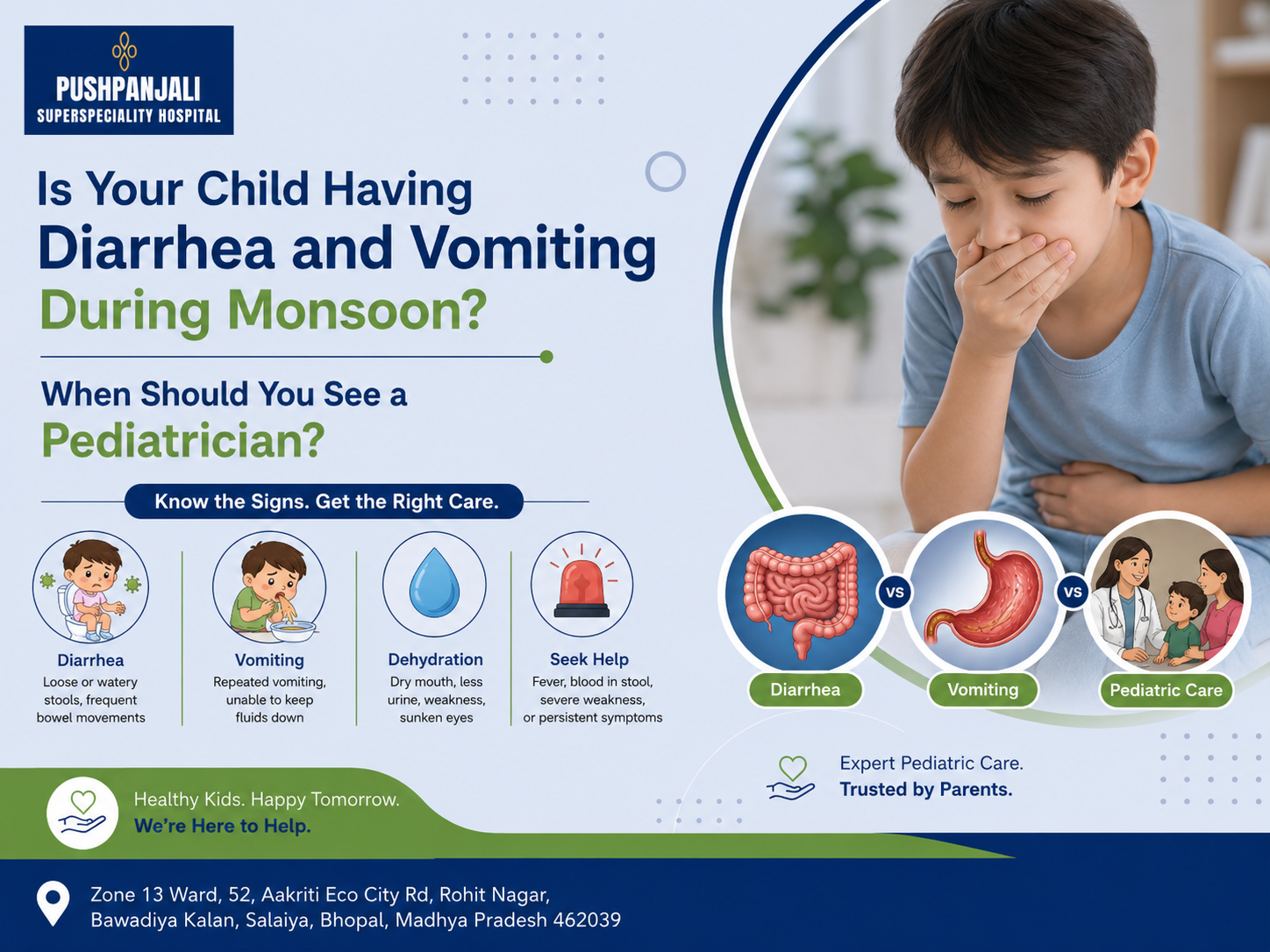
Monsoon can be a challenging season for parents when children suddenly develop loose motions, vomiting, stomach discomfort, or fever. Contaminated food and water, poor hand hygiene, and exposure to infections can contribute to gastrointestinal illness. Knowing when symptoms can be monitored at home and when professional evaluation is needed is important. A Pediatrician in Bhopal can assess your child’s symptoms, hydration, age, and overall condition and guide parents about the appropriate next step.
For many families, the biggest concern is knowing whether a child can be safely cared for at home or needs medical evaluation. Most importantly, parents should watch the child’s fluid intake, urine output, activity level, and general behavior. When diarrhea and vomiting occur together, fluid loss can increase, making timely attention especially important.
Why Are Diarrhea and Vomiting Common During Monsoon?
Rainy weather does not directly cause diarrhea or vomiting. However, monsoon conditions can increase opportunities for contamination of food, water, hands, and surfaces. Children may then come into contact with organisms that can cause gastrointestinal infections.A Pediatrician in Bhopal may consider several possible causes when a child develops sudden loose stools or vomiting. Viral infections are common, but bacterial and parasitic infections can also occur. The symptoms, duration, severity, and overall health of the child help determine whether further assessment is necessary.
What Can Cause Diarrhea and Vomiting in Children?
There are several possible causes of diarrhea and vomiting in children. Understanding them can help parents take sensible precautions without assuming that every episode requires the same treatment.
Viral Gastrointestinal Infections
Viral infections are common causes of acute diarrhea in children. A child may experience watery stools, vomiting, fever, stomach discomfort, tiredness, or reduced appetite.In many uncomplicated cases, supportive care and adequate hydration are important. However, the severity of symptoms matters. A child who remains active and drinks adequately may have a different level of concern than a child who cannot keep fluids down.
Contaminated Food or Water
Unsafe food or drinking water can expose children to microorganisms that may cause gastrointestinal infections. During the rainy season, parents should take extra care with drinking water, food preparation, storage, and cleanliness.Good food hygiene is particularly important for young children because they frequently put their hands and objects near their mouths.
Poor Hand Hygiene
Children regularly touch toys, tables, floors, playground equipment, and other surfaces. If infectious organisms are present, they can reach the child’s mouth through contaminated hands.Parents should encourage children to wash their hands with soap before eating and after using the toilet. Caregivers should also wash their hands before preparing food or feeding young children.
Bacterial or Parasitic Infections
Some intestinal infections are caused by bacteria or parasites. Depending on the infection, symptoms may include prolonged diarrhea, fever, abdominal discomfort, weakness, or blood in the stool.Parents should not assume that every episode requires antibiotics. The appropriate approach depends on the child’s symptoms and clinical assessment.Expert pediatric care for children with diarrhea and vomiting, including hydration, evaluation, nutrition, and supportive treatment at Pushpanjali Super Speciality Hospital, Bhopal.Know the warning signs of diarrhea and vomiting in children during monsoon and learn when to seek pediatric care in Bhopal.
What Symptoms Should Parents Watch For?
A child’s overall condition is often more important than the number of loose stools alone. Parents should observe whether the child is drinking, urinating, responding normally, and remaining reasonably active.
Common symptoms can include:
- Loose or watery stools
- Vomiting
- Abdominal discomfort
- Fever
- Reduced appetite
- Tiredness
- Increased thirst
- Dry mouth
- Reduced urination
- Irritability
- Weakness
A Pediatrician in Bhopal can evaluate these symptoms and determine whether the child is showing signs of dehydration or another condition requiring medical attention.Dehydration is one of the main concerns when children lose fluids through diarrhea and vomiting. Warning signs may include very little urine, dry mouth, sunken eyes, excessive sleepiness, weakness, difficulty drinking, or unusual behavior.
When Should You See a Pediatrician?
Parents do not need to panic whenever a child has loose stools. However, certain symptoms should prompt medical advice instead of prolonged home monitoring.
When Vomiting Is Repeated
Occasional vomiting can occur during stomach infections, but repeated vomiting can make it difficult for a child to replace lost fluids.If your child repeatedly vomits after drinking, cannot keep fluids down, or becomes increasingly weak, medical evaluation is advisable. A Pediatrician in Bhopal can assess hydration and consider whether the symptoms could have another underlying cause.
When There Are Signs of Dehydration
Dehydration occurs when fluid loss becomes greater than fluid replacement. Children with diarrhea and vomiting may be particularly vulnerable because they can lose fluids through both routes.Parents should watch for reduced urine output, dry mouth or tongue, excessive thirst, sunken eyes, unusual sleepiness, irritability, weakness, and difficulty drinking.A child who cannot drink, becomes difficult to wake, or appears severely dehydrated needs prompt medical attention.
When There Is Blood in the Stool
Blood in the stool should not be dismissed as a normal part of monsoon stomach problems. It can occur with certain intestinal infections and requires professional assessment.Parents should contact a healthcare professional if blood appears in the stool, especially if it occurs with fever, abdominal symptoms, weakness, or dehydration.
When Diarrhea Persists
Most short-term episodes improve with appropriate supportive care, but diarrhea that persists, keeps returning, or is associated with poor eating and weakness should be assessed.A doctor may consider the child’s age, duration of symptoms, hydration, nutrition, medical history, and other symptoms before deciding whether additional investigation is necessary.
When the Child Becomes Very Weak
Unusual sleepiness, difficulty waking, severe weakness, confusion, or inability to drink should be taken seriously. These symptoms can indicate that the illness is affecting the child’s overall condition.Parents should seek prompt medical care instead of waiting for diarrhea or vomiting to stop on its own.Expert pediatric care for children with diarrhea and vomiting, including hydration, evaluation, nutrition, and supportive treatment at Pushpanjali Super Speciality Hospital, Bhopal.

What Is Diarrhea Treatment in Children in Bhopal?
The appropriate Diarrhea Treatment in Children in Bhopal depends on the child’s age, symptoms, hydration status, nutritional condition, and possible cause. There is no single treatment suitable for every child.For many children, replacing fluids and electrolytes is a central part of supportive management. Oral rehydration solution, commonly called ORS, is designed to replace water and salts lost through diarrhea.
Oral Rehydration Solution
ORS should be prepared according to the instructions provided with the product. If vomiting is also present, some children may tolerate small and frequent amounts better than a large quantity at one time.If the child continues vomiting and cannot drink adequately, parents should seek medical assessment rather than relying only on oral hydration at home.
Continue Breastfeeding
Breastfeeding should generally continue during childhood diarrhea. Breast milk provides fluid and nutrition and does not need to be stopped simply because a baby has loose stools.Older children can usually continue appropriate foods as tolerated. A healthcare professional can provide age-appropriate feeding advice based on the child’s individual condition.
Zinc Supplementation
Zinc supplementation is included in international recommendations for childhood diarrhea management. Parents should discuss zinc supplementation with a healthcare professional, particularly for infants and children with other medical conditions.
Avoid Unnecessary Medicines
Parents should not give antibiotics, prescription medicines, or anti-diarrheal medicines without appropriate medical advice.Medicines suitable for adults may not be appropriate for young children. Treatment should be based on the child’s age, symptoms, clinical findings, and suspected cause.
What Is Vomiting Treatment in Children in Bawadiya Kalan?
The appropriate Vomiting Treatment in Children in Bawadiya Kalan depends on why the child is vomiting and whether adequate hydration can be maintained.Vomiting may occur with gastrointestinal infections, but it can also have other causes. Persistent or severe vomiting therefore deserves closer attention.
Maintaining Fluid Intake
When vomiting is present, parents should follow appropriate oral hydration guidance. Small amounts given frequently may sometimes be easier for a child to tolerate than large quantities at once.If the child repeatedly vomits everything they drink, professional medical assessment becomes important because dehydration can develop.
Monitoring Urination
Urine output can provide useful information about hydration. A significant reduction in urination, particularly when accompanied by dry mouth, weakness, excessive sleepiness, or poor fluid intake, should not be ignored.
Avoid Self-Medication
Parents should not give anti-vomiting medicines to young children without medical advice. The cause of vomiting and the child’s overall condition should be considered before medication is recommended.
How Can Parents Prevent Monsoon Diarrhea?
Preventing Monsoon Diarrhea in Children in Bawadiya Kalan begins with everyday hygiene and food-safety habits.
Give Children Safe Drinking Water
Children should be given safe drinking water, and water containers should be kept clean and covered.Parents should also be cautious about drinks and food consumed outside the home when the cleanliness of preparation or water sources is uncertain.
Encourage Handwashing
Children should wash their hands with soap before eating and after using the toilet. Parents and caregivers should also maintain proper hand hygiene before preparing food or feeding children.Younger children may need supervision because they often wash their hands quickly without cleaning them thoroughly.
Keep Food Clean and Covered
Food should be protected from dust, insects, dirty surfaces, and other sources of contamination. Cooked food should be handled and stored safely.Parents should avoid giving children food that appears spoiled or has been stored under questionable conditions.
Maintain Clean Surroundings
Kitchen surfaces, utensils, bathrooms, and children’s play areas should be kept clean. Proper waste disposal and sanitation can help reduce exposure to infectious organisms.These habits are useful throughout the year, but they become particularly important when monsoon conditions increase the possibility of contamination.
Monsoon Diarrhea in Children in Bawadiya Kalan: What Should Parents Know?
When parents notice Monsoon Diarrhea in Children in Bawadiya Kalan, they should focus on the child’s overall health rather than assuming that the illness is simply a seasonal problem.A child who remains alert, drinks adequately, urinates normally, and has no warning signs may sometimes be monitored with appropriate supportive care.However, repeated watery stools combined with vomiting can increase fluid loss. Younger children may become dehydrated more quickly, so parents should pay close attention to drinking and urination.If the child cannot drink, blood appears in the stool, urine output decreases significantly, or the child becomes unusually sleepy or weak, medical evaluation should not be delayed.
Can Diarrhea and Vomiting Affect a Child’s Nutrition?
Children often eat less when they have diarrhea or vomiting. Continued fluid and nutrient loss can contribute to weakness, particularly if symptoms persist.Appropriate nutrition remains important during recovery. Breastfeeding should generally continue, while older children can resume suitable foods as tolerated.A Pediatrician in Bhopal can guide parents when poor appetite, repeated diarrhea, or concerns about growth require further assessment.Parents should avoid unnecessarily stopping food for prolonged periods. If digestive symptoms continue or repeatedly return, individual evaluation can help determine whether additional assessment is needed.
How Is Childhood Diarrhea Diagnosed?
Diagnosis usually begins with understanding the child’s symptoms and overall condition. A doctor may ask when the diarrhea or vomiting started, how frequently it occurs, whether there is fever, how much the child is drinking, and whether urination has changed.The child’s age, weight, medical history, and nutritional status can also be relevant. A physical examination may help assess hydration and identify other symptoms.Not every child requires laboratory testing. Additional tests may be considered when symptoms are severe, persistent, unusual, or associated with specific warning signs.A Pediatrician in Bhopal can decide whether observation and supportive care are appropriate or whether further evaluation is required.
How Can a Pediatric Specialist Help?
A Pediatrician in Bhopal can help parents understand whether a child’s diarrhea and vomiting can be managed with supportive care or whether medical evaluation is needed.During an assessment, the doctor may consider the child’s age and weight, duration of symptoms, frequency of loose stools and vomiting, fluid intake, urine output, fever, abdominal symptoms, activity level, signs of dehydration, and relevant medical history.This assessment helps determine the appropriate next step. Some children may need hydration and observation, while others may require closer medical monitoring.
Choosing the Best Pediatric Hospital in Bhopal for Your Child’s Care
When a child becomes unwell, parents often want access to pediatric care in a setting where the child’s symptoms can be assessed appropriately. Choosing the Best Pediatric Hospital in Bhopal should involve looking at the available pediatric services, medical professionals, and the type of care provided.For families in Bawadiya Kalan and surrounding areas, Pushpanjali Super Speciality Hospital has a dedicated Pediatrics department. Its website describes pediatric services for infants, children, and adolescents.
Pediatric Care at Pushpanjali Super Speciality Hospital
Pushpanjali Super Speciality Hospital is located in Bawadiya Kalan, Bhopal. The hospital website lists pediatric care among its departments and identifies Dr. Ankur Singhai as a pediatrician.Dr. Ankur Singhai is listed with the qualifications MBBS, DCH, DNB, MNAMS. The hospital’s pediatric page describes care including newborn care, child development, pediatric treatments, vaccination, growth and development monitoring, childhood illness treatment, nutrition guidance, and adolescent care.The hospital website also describes a child-friendly environment, modern pediatric care units, diagnostic services, and emergency care support.For families considering the Best Pediatric Hospital in Bhopal, Pushpanjali Super Speciality Hospital provides pediatric services in Bawadiya Kalan.For families seeking Diarrhea Treatment in Children in Bhopal, pediatric evaluation can help determine whether hydration and observation are sufficient or whether further care is needed.Similarly, children requiring Vomiting Treatment in Children in Bawadiya Kalan may benefit from assessment when repeated vomiting makes it difficult to maintain fluid intake.The hospital website states that the hospital is open 24 hours.
Why Timely Pediatric Evaluation Matters
Parents may initially focus on stopping diarrhea or vomiting, but hydration and the child’s overall condition are often more important concerns.A Pediatrician in Bhopal can evaluate symptoms in context and help identify warning signs that may not be obvious to parents.Timely evaluation is especially important when the child is very young, cannot drink properly, has significantly reduced urination, develops blood in the stool, becomes severely weak, or shows unusual sleepiness.Good pediatric care is not simply about prescribing medicines. It involves understanding the child’s condition, assessing possible causes, monitoring hydration, and deciding what level of care is appropriate.
When Should Parents Consider a Pediatric Hospital?
Parents may need to consider the Best Pediatric Hospital in Bhopal when symptoms are severe, persistent, or require more comprehensive pediatric assessment.For families near Bawadiya Kalan, Pushpanjali Super Speciality Hospital provides pediatric services and has Dr. Ankur Singhai listed as a pediatrician.The decision to seek hospital care should always depend on the child’s condition. Parents should not delay urgent medical attention simply because they expect symptoms to improve on their own.
Frequently Asked Questions About Childhood Diarrhea and Vomiting
When should I take my child to a Pediatrician in Bhopal for diarrhea?
Parents should seek medical advice when diarrhea is persistent, the child cannot drink adequately, urine output decreases, blood appears in the stool, or the child becomes unusually weak or sleepy. A Pediatrician in Bhopal can assess hydration and determine whether further care is required.
What is the biggest concern when a child has diarrhea and vomiting?
Dehydration is a major concern because fluid can be lost through both diarrhea and vomiting. Reduced urination, dry mouth, excessive sleepiness, sunken eyes, weakness, or difficulty drinking should receive prompt attention.
Is ORS useful for children with diarrhea?
ORS is commonly used to replace fluids and electrolytes lost during diarrhea. It should be prepared according to the product instructions. If the child repeatedly vomits or cannot drink, parents should seek medical advice.
When is Diarrhea Treatment in Children in Bhopal needed?
Diarrhea Treatment in Children in Bhopal should be guided by the child’s symptoms, hydration status, age, and overall condition. Professional evaluation is particularly important when diarrhea is severe, persistent, associated with blood in the stool, or accompanied by dehydration.
Can vomiting during monsoon always be considered a stomach infection?
No. Vomiting can have several causes. Although gastrointestinal infections are one possibility when vomiting occurs with diarrhea, persistent or severe vomiting should be evaluated instead of automatically being attributed to seasonal illness.
What should I do if my child cannot keep fluids down?
If a child repeatedly vomits after drinking and cannot maintain fluid intake, medical advice should be sought promptly. Continued fluid loss without adequate replacement increases the risk of dehydration.
Is Vomiting Treatment in Children in Bawadiya Kalan the same for every child?
No. Vomiting Treatment in Children in Bawadiya Kalan depends on the child’s age, symptoms, hydration, possible cause, and overall health. A pediatric professional should determine whether supportive care is sufficient or whether further evaluation is needed.
How can parents reduce the risk of diarrhea during monsoon?
Safe drinking water, handwashing with soap, hygienic food preparation, clean surroundings, and appropriate sanitation can reduce exposure to organisms that cause gastrointestinal infections. These practices are useful throughout the year.
When should Monsoon Diarrhea in Children in Bawadiya Kalan be evaluated?
Monsoon Diarrhea in Children in Bawadiya Kalan should be evaluated when a child develops signs of dehydration, cannot drink, has blood in the stool, becomes unusually weak or sleepy, or has symptoms that persist or worsen.
How do I choose the Best Pediatric Hospital in Bhopal?
When choosing the Best Pediatric Hospital in Bhopal, parents can consider the availability of pediatric services, qualified pediatric professionals, location, accessibility, and the type of child healthcare provided. Pushpanjali Super Speciality Hospital lists pediatric services for infants, children, and adolescents and identifies Dr. Ankur Singhai as a pediatrician.
Conclusion
Diarrhea and vomiting during monsoon can have different causes, and the severity can vary significantly between children. Parents should focus on maintaining hydration, continuing appropriate feeding, practicing safe food and water habits, and watching for warning signs.Diarrhea Treatment in Children in Bhopal should be based on the individual child’s condition. Likewise, Vomiting Treatment in Children in Bawadiya Kalan may require professional assessment when vomiting is repeated or affects the child’s ability to drink.For families seeking the Best Pediatric Hospital in Bhopal, Pushpanjali Super Speciality Hospital provides pediatric services in Bawadiya Kalan and lists Dr. Ankur Singhai as a pediatrician.When symptoms are persistent, severe, or accompanied by signs of dehydration, consulting a Pediatrician in Bhopal can help parents understand the child’s condition and determine the appropriate next step.