
BLOG
Early Signs of a Heart Attack: Symptoms You Should Never Ignore
A heart attack is a serious medical emergency that requires immediate attention. It can begin with chest pain, shortness of…
Is Your Child Having Diarrhea and Vomiting During Monsoon? When Should You See a Pediatrician?
Monsoon can be a challenging season for parents when children suddenly develop loose motions, vomiting, stomach discomfort, or fever. Contaminated…
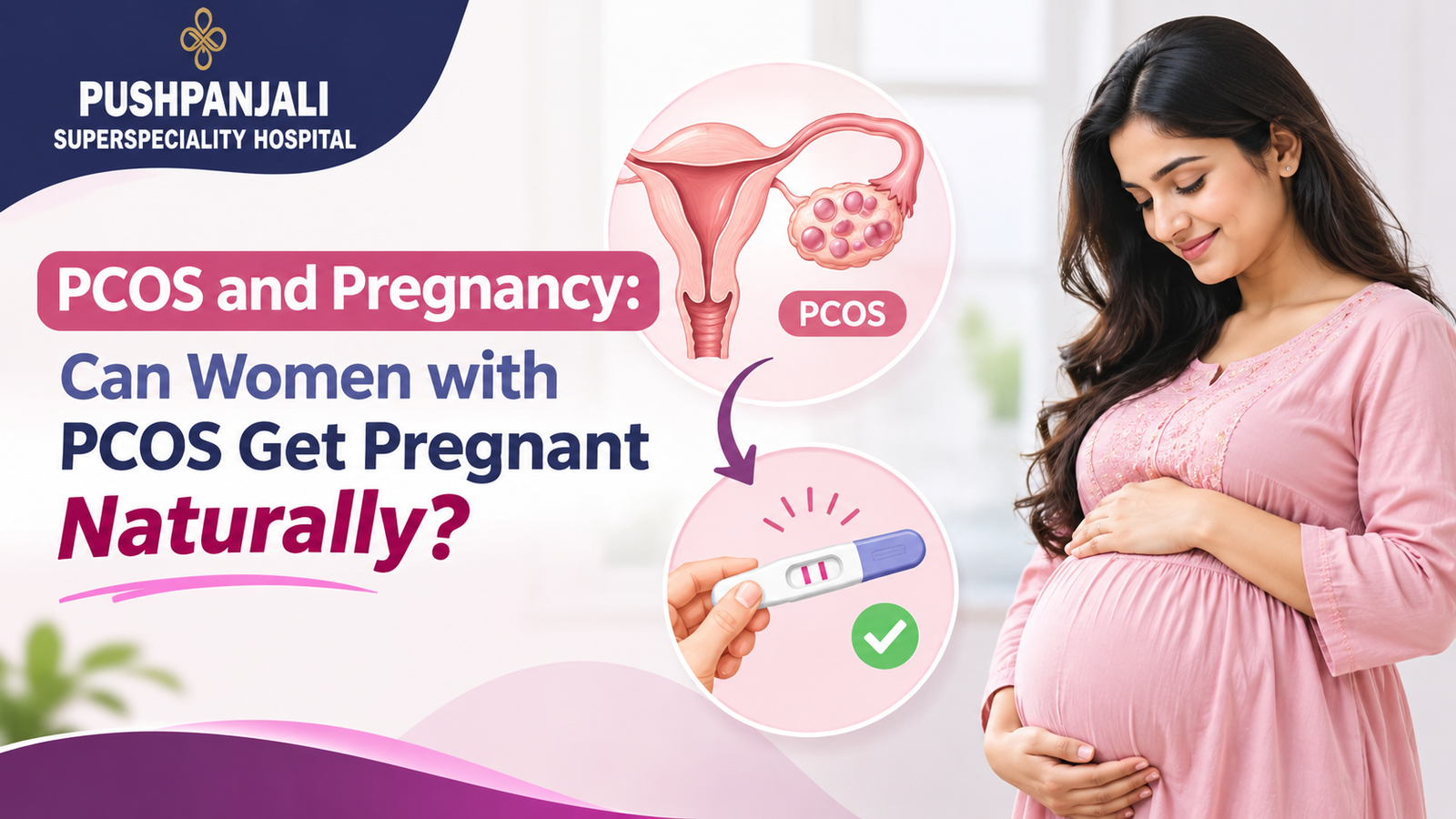
Polycystic Ovary Syndrome (PCOS) is a common hormonal condition that affects women during their reproductive years. It can cause irregular periods, hormonal changes, acne, unwanted facial hair and difficulty with ovulation. Many women diagnosed with PCOS worry about their ability to become pregnant and whether they will need fertility treatment.
The good news is that many women with PCOS can get pregnant naturally. However, pregnancy chances may depend on ovulation patterns, age, hormonal health and other fertility factors. With proper medical guidance, lifestyle changes and suitable treatment, women can improve their reproductive health and plan for pregnancy.
If you are searching for PCOS Treatment in Bhopal, understanding the connection between PCOS and pregnancy is an important first step. Pushpanjali SuperSpeciality Hospital, Bhopal, provides gynecology and fertility-related healthcare services to help women understand their reproductive health and explore suitable treatment options.
In this article, we will explain PCOS symptoms, its effect on fertility, natural pregnancy chances, diagnosis and available treatment options.
What Is PCOS (Polycystic Ovary Syndrome)?
Polycystic Ovary Syndrome, commonly called PCOS, is a hormonal and metabolic condition that affects how a woman’s ovaries function.
Women with PCOS may have higher levels of certain hormones called androgens. They may also experience irregular ovulation and changes in the appearance of their ovaries on an ultrasound.
During a normal menstrual cycle, an ovary releases an egg. This process is called ovulation. The released egg can be fertilised by sperm, which may lead to pregnancy.
However, women with PCOS may not ovulate regularly. Sometimes, the egg does not mature or release as expected. This can make it difficult to predict fertile days and plan a pregnancy.
PCOS affects every woman differently. Some women experience irregular periods and acne, while others may have difficulty conceiving without noticing many other symptoms.
Early diagnosis and appropriate PCOS Treatment in Bhopal can help women manage symptoms, understand their fertility and make informed decisions about pregnancy planning.
Common Symptoms of PCOS in Women
PCOS symptoms can vary from one woman to another. Some women experience several symptoms, while others may have only a few.
Here are some common PCOS symptoms in women.
1. Irregular Menstrual Periods
Irregular periods are one of the most common signs of PCOS.
Women may experience:
- Fewer menstrual periods in a year.
- Longer gaps between periods.
- Unpredictable menstrual cycles.
- Missed periods for several months.
Irregular periods may indicate that ovulation is not happening regularly.
2. Difficulty Getting Pregnant
PCOS can affect fertility because irregular ovulation may reduce the number of opportunities for an egg to be fertilised.
However, having PCOS does not mean that pregnancy is impossible. Many women conceive naturally or with medical support.
3. Acne and Oily Skin
Higher androgen levels can increase oil production in the skin. This may lead to acne, especially around the chin, jawline, chest and back.
4. Unwanted Facial or Body Hair
Some women develop extra hair growth on the face, chin, chest or abdomen. This condition is called hirsutism and is linked to higher androgen levels.
5. Weight Gain
Some women with PCOS experience weight gain or difficulty managing their weight. Insulin resistance may also contribute to metabolic changes.
However, PCOS can affect women of different body weights.
6. Hair Thinning
Hormonal changes may cause thinning of scalp hair, particularly around the crown or front of the head.
If you notice these symptoms, consult a gynecologist for proper evaluation rather than relying on symptoms alone.
Can Women with PCOS Get Pregnant Naturally?
Yes, many women with PCOS can get pregnant naturally.
PCOS can affect ovulation, but it does not automatically mean that a woman cannot conceive. Some women with PCOS ovulate regularly or occasionally and may become pregnant without fertility treatment.
The main challenge is often irregular ovulation. When ovulation does not happen regularly, predicting the fertile window becomes difficult.
Pregnancy chances depend on several factors, including:
- Whether ovulation occurs regularly.
- Age and overall reproductive health.
- Hormonal balance.
- Body weight and metabolic health.
- Sperm health.
- Other fertility-related conditions.
Women with PCOS who have irregular periods and are planning pregnancy should consider an early fertility consultation.
A gynecologist can review menstrual history, assess ovulation and recommend suitable investigations.
With the right medical advice, PCOS Treatment in Bhopal can help women understand their condition and explore ways to improve their chances of conception.
How Does PCOS Affect Female Fertility?
PCOS can affect female fertility mainly by interfering with the normal ovulation process.
During a regular menstrual cycle, the ovaries prepare an egg for release. Hormones help the egg mature and trigger ovulation.
In women with PCOS, hormonal changes can interfere with this process. The egg may not mature properly or may not be released during some menstrual cycles.
This can lead to several fertility-related challenges.
1. Irregular Ovulation
Ovulation may happen less frequently or unpredictably. As a result, women may have fewer fertile days during the year.
2. Hormonal Imbalance
Higher androgen levels can affect normal ovarian function and menstrual cycle regularity.
3. Insulin Resistance
Some women with PCOS have insulin resistance. This means the body does not respond to insulin as effectively as it should.
The body may produce more insulin to manage blood sugar levels. Higher insulin levels can contribute to increased androgen production and may further affect ovulation.
4. Difficulty Predicting Fertile Days
Women with irregular periods may find it difficult to identify when ovulation occurs.
This can make natural conception planning more challenging.
Understanding these factors helps doctors recommend suitable PCOS Treatment in Bhopal according to individual health needs and pregnancy goals.
What Are the Chances of Pregnancy with PCOS?
There is no single pregnancy success rate that applies to every woman with PCOS.
Some women conceive naturally, while others need medical support to achieve regular ovulation.
Pregnancy chances depend on:
- Age and reproductive health.
- Frequency of ovulation.
- Hormonal health.
- Egg and sperm health.
- Lifestyle and metabolic factors.
- Other possible causes of infertility.
Women with PCOS who ovulate occasionally may have opportunities for natural conception. Those who do not ovulate regularly may benefit from fertility evaluation and treatment.
It is important to remember that PCOS is a manageable condition. A diagnosis does not mean that you will never become pregnant.
Instead of comparing your fertility journey with someone else’s, consult a gynecologist to understand your individual reproductive health.
How Is PCOS Diagnosed?
PCOS diagnosis involves reviewing symptoms, menstrual history, medical history and relevant investigations.
A doctor may recommend the following tests depending on your symptoms and health condition.
1. Hormonal Blood Tests
Blood tests may help assess hormone levels and identify other conditions that can cause irregular periods.
Depending on the clinical situation, doctors may check:
- Testosterone levels.
- Thyroid function.
- Prolactin levels.
- Other reproductive hormones.
2. Pelvic Ultrasound
An ultrasound may help examine the ovaries and uterus. It can identify polycystic ovarian morphology and check for other pelvic conditions.
However, an ultrasound alone cannot confirm PCOS. Some women with PCOS may not show polycystic ovarian morphology, while others may have this appearance without having PCOS.
3. Blood Sugar Assessment
Doctors may recommend blood glucose testing, HbA1c or an oral glucose tolerance test to assess metabolic health.
These investigations are useful because women with PCOS may have an increased risk of insulin resistance and type 2 diabetes.
4. Medical History and Physical Examination
Your doctor may ask about:
- Menstrual cycle patterns.
- Weight changes.
- Acne and unwanted hair growth.
- Previous pregnancies.
- Family medical history.
- Fertility concerns.
PCOS is generally diagnosed using established clinical criteria after excluding other possible causes of similar symptoms.
Treatment Options for PCOS and Pregnancy
Treatment depends on the woman’s symptoms, reproductive goals, age and overall health.
Women who want to become pregnant may need a different treatment approach from those who are primarily managing irregular periods or hormonal symptoms.
At Pushpanjali SuperSpeciality Hospital, women looking for PCOS Treatment in Bhopal can enquire about gynecology and fertility-related consultation to understand suitable medical options.
Common treatment approaches include the following.
1. Lifestyle Changes
Healthy lifestyle habits can support hormonal and metabolic health.
Doctors may recommend:
- Eating a balanced diet.
- Including vegetables, fruits and whole grains.
- Choosing suitable protein-rich food sources.
- Reducing highly processed foods and sugary drinks.
- Maintaining regular physical activity.
- Getting sufficient sleep.
- Managing stress.
For women who are overweight, even moderate weight reduction may improve metabolic health and ovulation in some cases.
However, weight loss is not necessary for every woman with PCOS. Treatment should be based on individual needs.
2. Ovulation Induction
Ovulation induction involves using medication to help the ovaries release an egg.
For women with PCOS who have anovulatory infertility and no other major infertility factors, letrozole is generally recommended as the first-line medication.
Other medicines may be considered depending on the patient’s medical history and response to treatment.
These medications should only be used under medical supervision because monitoring may be required.
3. Metformin
Metformin is a medicine that helps improve insulin sensitivity.
It may be recommended for selected women with PCOS, particularly those with metabolic concerns or certain fertility-related needs.
It is not necessary or suitable for every woman with PCOS. A doctor should decide whether it is appropriate.
4. Fertility Monitoring
Women undergoing fertility treatment may need monitoring to understand how their ovaries respond to medication.
Depending on the treatment plan, a doctor may recommend:
- Ultrasound scans.
- Hormone tests.
- Follicular monitoring.
- Assessment of follicle development.
Follicular monitoring can help doctors understand egg development and guide further treatment.
5. IVF Treatment
In some cases, women with PCOS may require assisted reproductive techniques such as In Vitro Fertilization (IVF).
IVF may be considered when other fertility treatments have not worked, when additional infertility factors are present or when there are specific medical indications.
Women with PCOS undergoing IVF may need careful ovarian stimulation and monitoring because they can have an increased risk of ovarian hyperstimulation syndrome (OHSS).
The treatment plan should always be individualised by a fertility specialist.
Tips to Improve Natural Pregnancy Chances with PCOS
Women with PCOS who are planning pregnancy can discuss the following steps with their gynecologist.
Maintain a Balanced Diet
A balanced diet supports overall health and blood sugar management.
Include vegetables, fruits, whole grains, pulses, nuts and suitable protein sources in your daily meals.
Try to maintain regular meal timings and limit excessive intake of sugary drinks and highly processed foods.
Exercise Regularly
Regular physical activity can improve insulin sensitivity and support metabolic health.
Walking, cycling, swimming, yoga and strength exercises are some suitable options.
Choose activities that match your fitness level and medical condition.
Track Your Menstrual Cycle
Keeping a record of your menstrual cycle can help identify irregular patterns.
Women with PCOS may not always be able to predict ovulation using calendar-based methods, so a doctor may suggest additional monitoring.
Manage Stress and Sleep
Poor sleep and ongoing stress can affect general health and make it harder to maintain healthy routines.
Try to follow a consistent sleep schedule and include relaxing activities in your daily routine.
Take Medical Advice Before Pregnancy
Women planning pregnancy should discuss folic acid supplementation, existing medicines, vaccinations and any medical conditions with their doctor.
Do not start fertility medicines or hormonal supplements without medical guidance.
When Should You Consult a PCOS Specialist in Bhopal?
Many women delay consultation because they believe irregular periods are normal with PCOS.
However, medical evaluation is important, especially when symptoms continue or pregnancy is planned.
You should consider consulting a gynecologist if:
- Your periods are frequently irregular.
- You have fewer than eight menstrual cycles in a year.
- You have not had a period for several months.
- You experience difficulty getting pregnant.
- You notice excessive facial hair or persistent acne.
- You experience unexplained weight changes.
- You are planning pregnancy and have a known PCOS diagnosis.
Women with irregular periods or known ovulation problems should seek fertility advice without waiting for the usual 12-month infertility period.
If you are searching for a PCOS Specialist in Bhopal, choose a qualified gynecologist who can evaluate your symptoms and recommend suitable treatment options.
Early consultation can help you understand your condition and avoid unnecessary delays in fertility planning.
Can PCOS Affect Pregnancy After Conception?
PCOS can be associated with a higher risk of certain pregnancy complications, including:
- Gestational diabetes.
- High blood pressure during pregnancy.
- Preeclampsia.
- Preterm birth.
However, these complications do not occur in every woman with PCOS.
Women with PCOS who become pregnant should receive appropriate antenatal care and follow their doctor’s recommendations.
Depending on individual risk factors, the doctor may recommend:
- Early pregnancy assessment.
- Blood sugar evaluation.
- Blood pressure monitoring.
- Routine pregnancy ultrasound scans.
- Regular antenatal appointments.
- Additional monitoring when medically required.
With appropriate pregnancy care, women with PCOS can work towards a healthy pregnancy.
Why Choose Pushpanjali SuperSpeciality Hospital for Women’s Healthcare in Bhopal?
Pushpanjali SuperSpeciality Hospital is located in Bawadiya Kalan, Bhopal, and provides multiple healthcare services under one roof.
The hospital has an Obstetrics and Gynaecology Department with fertility-related services, including:
- Fertility OPD.
- IUI and IVF services.
- Donor insemination.
- Laparoscopic and hysteroscopic surgeries.
- Fertility-related diagnostic services.
- Pregnancy care and monitoring.
Women seeking PCOS Treatment in Bhopal can enquire about gynecology consultation to discuss their symptoms, menstrual health and pregnancy planning.
The hospital also provides diagnostic facilities, including ultrasonography, pathology and other investigations.
A proper consultation can help identify the next steps based on each woman’s symptoms, medical history and reproductive goals.
Frequently Asked Questions About PCOS Treatment in Bhopal
1. Can women with PCOS get pregnant naturally?
Yes, many women with PCOS can conceive naturally. However, irregular ovulation may make pregnancy planning difficult. Medical evaluation can help identify fertility concerns and suitable treatment options.
2. Does PCOS mean infertility?
No. PCOS does not automatically mean infertility. It can affect ovulation and make conception more difficult for some women, but many women with PCOS become pregnant naturally or with medical assistance.
3. What is the best treatment for PCOS when planning pregnancy?
Treatment depends on the woman’s condition. Lifestyle changes, ovulation induction medicines and fertility treatments may be considered. A gynecologist can recommend an appropriate approach after evaluation.
4. Can PCOS be cured permanently?
There is currently no permanent cure for PCOS. However, symptoms and related health concerns can often be managed through lifestyle changes, medical treatment and regular follow-up.
5. Can I get pregnant with PCOS without IVF?
Yes. Many women with PCOS conceive without IVF. Depending on ovulation and other fertility factors, natural conception or ovulation induction may be possible.
6. Does PCOS affect menstrual periods?
Yes. PCOS can cause irregular periods, longer menstrual cycles or missed periods because ovulation may not occur regularly.
7. Which tests are required to diagnose PCOS?
A doctor may recommend hormonal blood tests, pelvic ultrasound and blood sugar assessment. The required investigations depend on symptoms and medical history.
8. Does PCOS increase pregnancy complications?
PCOS is associated with a higher risk of certain complications, such as gestational diabetes and high blood pressure. Regular antenatal care and appropriate monitoring are important.
9. When should I visit a PCOS doctor in Bhopal?
You should consult a gynecologist if you have irregular periods, symptoms of hormonal imbalance or difficulty conceiving. Early evaluation can help you understand your condition and treatment options.
10. Can lifestyle changes improve PCOS symptoms?
Yes. A balanced diet, regular exercise, sufficient sleep and healthy weight management can improve metabolic health and may support more regular ovulation in some women.
Book a Gynecology Consultation at Pushpanjali SuperSpeciality Hospital, Bhopal
PCOS can affect menstrual health, hormonal balance and fertility, but it does not mean that pregnancy is impossible. Many women with PCOS conceive naturally, while others may benefit from medical treatment and fertility support.
Understanding your condition and seeking timely medical advice can help you make informed decisions about your reproductive health.
If you are looking for PCOS Treatment in Bhopal, contact Pushpanjali SuperSpeciality Hospital to discuss your symptoms, fertility concerns and available gynecology services.
Hospital: Pushpanjali SuperSpeciality Hospital
Address: Zone 13 Ward, 52, Aakriti Eco City Road, Rohit Nagar, Bawadiya Kalan, Salaiya, Bhopal, Madhya Pradesh – 462039
Contact Number: +91 755 429 3344
Availability: Open 24 Hours
Contact the hospital to enquire about gynecology OPD timings and appointment availability.
Medical Disclaimer: This article is intended for general educational purposes and does not replace professional medical advice, diagnosis or treatment. PCOS symptoms and treatment needs vary between individuals. Consult a qualified healthcare professional for personal medical guidance.